


RMO vs RME: Contractor License Qualifiers Explained
What a qualifying individual does, the difference between a Responsible Managing Officer and a Responsible Managing Employee, and the rules each must follow.
Quick answer
Every license needs a qualifying individual who passed the exams. A Responsible Managing Officer (RMO) is an officer of a corporation or LLC; a Responsible Managing Employee (RME) is an employee. Both must supervise and control the construction work. An RME must work in the business at least 32 hours a week or 80 percent of its operating hours, whichever is less, and the license needs a $25,000 Bond of Qualifying Individual.
What a Qualifier Does
The qualifying individual is responsible for exercising direct supervision and control of the license’s construction operations to make sure the work complies with California’s building laws. The license is issued to the business, but it depends on the qualifier.
RMO vs RME at a Glance
| RMO | RME | |
|---|---|---|
| Who | A bona fide officer of a corporation (or officer, manager or member of an LLC) | A bona fide employee of the business |
| Work requirement | Actively engaged in the business | At least 32 hours a week or 80% of operating hours, whichever is less |
| Bond of Qualifying Individual | Not needed if the RMO owns 10% or more of the voting stock or equity | Always required ($25,000) |
| Workers’ compensation exemption | Possible if there are no employees | Not allowed |
| Own individual license | May keep it | Must inactivate it while serving as RME |
Qualifying More Than One License
A person can act as the qualifier for more than one license only in limited cases, such as when there is at least 20 percent common ownership between the businesses, and no more than three businesses in a one year period (Business and Professions Code section 7068.1).
When a Qualifier Leaves
The business must report the change to CSLB within 90 days and replace the qualifier to keep the license. Replacing a qualifier costs $230. See changing a license.
Become a Qualifier
CSLP has prepared California contractors for their CSLB exams since 2013. Our courses include help with your CSLB application, online law and trade books with practice questions and weekly live classes in English and Spanish, from $595. Compare course options.
Content reviewed against CSLB sources: November 2026
- CSLB: Issuing my license
- CSLB: Requirements for adding a classification
- CSLB: Change in personnel
- California Business and Professions Code section 7068.1
- CSLB: List of all fees
Online California Contractor License Courses
Prepare for your California CSLB Law & Business and Trade exams with flexible online contractor license courses designed for real working contractors. Choose from three study plans with 24/7 online access, bilingual support, weekly live classes, and expert guidance throughout the licensing process.
Fast Track
$595
- 2026 Updated Classes
- Online Law Book
- Online Trade Book
- Weekly Live Online Classes
- Application processing
- 24/7 Online Access
Plus
$1,395
- Everything in “Fast Track”
- Plus:
- Law & Business Flash Cards
- Per Chapter Practice Exams
- Extended Study Time
- Physical Law & Trade Books

Premium
$1,595
- Everything in “Plus”
- Plus:
- Business Launch Checklist
- Digital Business Card ($200 value)
- Double Study Time vs. “Plus”
All Online Course Packages Include:
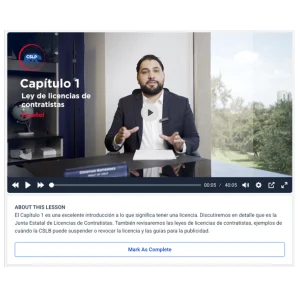 Bilingual Lessons
English & Español
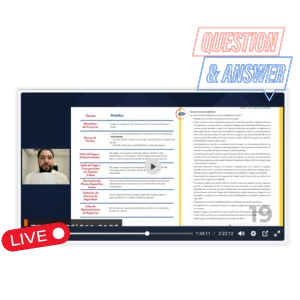 Weekly Live Classes
Online Only
 Law & Trade Books
English & Español
 Proven Results
20,000+ Graduates
RMO vs RME: Contractor License Qualifiers Explained: FAQs
Can I be an RME for a company I do not own?
Yes. That is what an RME is: a qualified employee. You must meet the work hour rule and the business needs a Bond of Qualifying Individual.
Do I lose my own license if I become an RME?
An RME cannot be active on more than one license, so you must inactivate your individual license while serving as an RME.
Can one person qualify a corporation and their own sole owner license?
Only if the limited conditions in Business and Professions Code section 7068.1 are met, such as common ownership of at least 20 percent.