


Class B vs C-8 Concrete License
When a concrete job needs the C-8 Concrete license and when a Class B General Building contractor can do it.
Quick answer
A C-8 contractor forms, pours and finishes concrete, including flatwork, foundations and pavement. A Class B contractor can include concrete as part of a building project with at least two unrelated trades, but a concrete only contract needs a C-8 license or a licensed C-8 subcontractor.
Class B General Building vs C-8 Concrete at a Glance
| Class B General Building | C-8 Concrete | |
|---|---|---|
| License type | General Building | Specialty (C) |
| In short | The Class B General Building license is the most popular license in California. It lets you take prime contracts for new construction, additions and remodels that involve at least two unrelated building trades. | The C-8 Concrete license covers forming, pouring, placing and finishing concrete, from driveways and patios to foundations and commercial flatwork. |
| Typical jobs | New homes, ADUs and commercial buildings; Room additions and whole-house remodels; Kitchen and bathroom remodels involving two or more unrelated trades; Tenant improvements in commercial spaces | Driveways, sidewalks, patios and flatwork; Foundations and slabs; Stamped and decorative concrete; Concrete forms and screeds |
| Not included | Single-trade jobs other than framing or carpentry (for example plumbing only) unless you hold that specialty license; Fire protection work (requires a C-16 or a licensed C-16 subcontractor); Well drilling (requires a C-57 or a licensed C-57 subcontractor) | Plaster coatings as a sole business (C-35); Placing reinforcing steel as a sole business (C-50); Masonry block walls (C-29) |
| Exams | Law and Business plus the B trade exam | Law and Business plus the C-8 trade exam |
| Exam in Spanish | Yes, both exams | Yes, both exams |
| Workers’ compensation | Exemption allowed if you have no employees | Required, even with no employees |
What the Class B General Building Covers
CSLB definition: A general building contractor’s principal contracting business is in connection with any structure built, being built, or to be built for the support, shelter and enclosure of persons, animals, chattels or movable property of any kind, requiring in its construction the use of at least two unrelated building trades or crafts, or to do or superintend the whole or any part thereof.
- New homes, ADUs and commercial buildings
- Room additions and whole-house remodels
- Kitchen and bathroom remodels involving two or more unrelated trades
- Tenant improvements in commercial spaces
- Framing or carpentry projects (a B may take these on their own)
- Managing and coordinating specialty subcontractors on a project
The two-trade rule is the most tested B concept: a B contractor may take a prime contract for a project with at least two unrelated trades other than framing or carpentry, and may take framing or carpentry jobs on their own. Any other single-trade job requires the matching specialty license or a licensed specialty subcontractor. See the full Class B General Building license guide.
What the C-8 Concrete Covers
CSLB definition: A concrete contractor forms, pours, places, finishes and installs specified mass, pavement, flat and other concrete work; and places and sets screeds for pavements or flatwork. This class shall not include contractors whose sole contracting business is the application of plaster coatings or the placing and erecting of steel or bars for the reinforcing of concrete work.
- Driveways, sidewalks, patios and flatwork
- Foundations and slabs
- Stamped and decorative concrete
- Concrete forms and screeds
- Mass and pavement concrete
CSLB does not allow C-8 concrete contractors to file a workers’ compensation exemption, so plan for a workers’ compensation policy when your license is issued. See the full C-8 Concrete license guide.
Key Differences
- Concrete only jobs: need a C-8. A B cannot take them alone unless it also holds the C-8.
- Building projects: a B can include foundations and slabs within a multi trade project.
- Workers’ compensation: C-8 contractors must carry it even with no employees. A B can file an exemption if it has none.
- Exams: both trade exams are offered in Spanish.
Which License Should You Get?
- Choose the Class B General Building if concrete is one part of the buildings and remodels you manage.
- Choose the C-8 Concrete if your business is driveways, patios, foundations, slabs and other concrete work.
- Hold both if you run building projects and also take stand alone concrete jobs.
Prepare for Your Exam
CSLP has prepared California contractors for their CSLB exams since 2013. Our courses include help with your CSLB application, online law and trade books with practice questions and weekly live classes in English and Spanish, from $595. Compare course options.
Content reviewed against CSLB sources: November 2026
- CSLB: B classification
- CSLB: C-8 classification
- CSLB: License classifications
- CSLB: Workers’ compensation requirements
Online California Contractor License Courses
Prepare for your California CSLB Law & Business and Trade exams with flexible online contractor license courses designed for real working contractors. Choose from three study plans with 24/7 online access, bilingual support, weekly live classes, and expert guidance throughout the licensing process.
Fast Track
$595
- 2026 Updated Classes
- Online Law Book
- Online Trade Book
- Weekly Live Online Classes
- Application processing
- 24/7 Online Access
Plus
$1,395
- Everything in “Fast Track”
- Plus:
- Law & Business Flash Cards
- Per Chapter Practice Exams
- Extended Study Time
- Physical Law & Trade Books

Premium
$1,595
- Everything in “Plus”
- Plus:
- Business Launch Checklist
- Digital Business Card ($200 value)
- Double Study Time vs. “Plus”
All Online Course Packages Include:
 Bilingual Lessons
English & Español
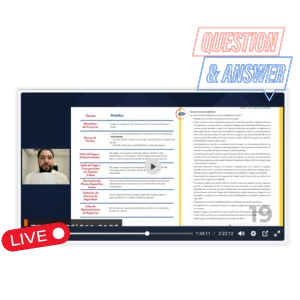 Weekly Live Classes
Online Only
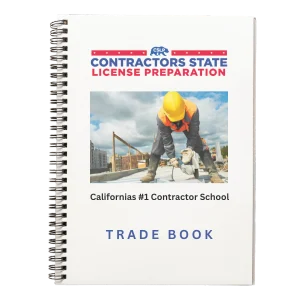 Law & Trade Books
English & Español
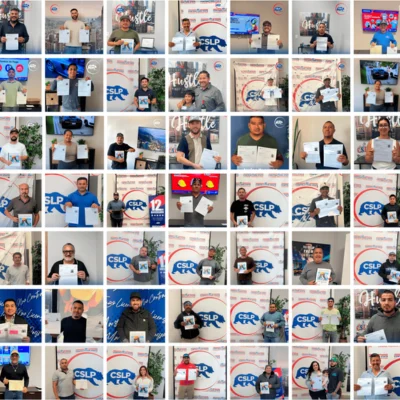 Proven Results
20,000+ Graduates
Class B vs C-8 Concrete License: FAQs
Can a B contractor pour a driveway by itself?
No. A concrete only driveway is a single trade job that needs a C-8, unless the B also holds the C-8 or subcontracts to a licensed C-8.
Does a C-8 cover masonry block walls?
No. Block and brick walls are C-29 Masonry work.
Why must C-8 contractors carry workers’ comp?
California law lists C-8 among the classifications that cannot file a workers’ compensation exemption.